back to insights
Planning
Why Simplicity Is the Hardest Thing to Achieve in Kitchen Design — Meker’s Lebanon Philosophy
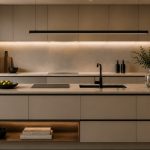
In kitchen design, simplicity is often misunderstood.
It is associated with:
- minimal lines
- clean surfaces
- absence of visible complexity
At first glance, simplicity appears easy.
Fewer elements. Less detail. A more restrained composition.
In reality, simplicity is one of the most difficult outcomes to achieve.
Because simplicity does not remove complexity.
👉 It hides it.
A simple kitchen requires a higher level of control over every element:
- alignment must be exact
- gaps must be perfectly consistent
- proportions must be balanced
- materials must interact seamlessly
There is no visual distraction to absorb imperfections.
Any deviation becomes immediately visible.
In more complex designs, variation can be masked:
- decorative elements distract the eye
- textures break continuity
- multiple features divide attention
In a simple design, nothing can be hidden.
This is why minimal kitchens often feel more refined.
Not because they are simpler to produce —
👉 but because they demand greater precision.
Another challenge lies in integration.
A simple kitchen requires that multiple systems work together invisibly:
- handles are integrated or eliminated
- appliances are concealed
- storage solutions are embedded within the structure
This requires coordination between:
- design
- materials
- hardware
- installation
Every decision must support the overall clarity.
Any inconsistency disrupts the result.
Proportion is also critical.
In a minimal composition, the relationship between elements becomes more prominent:
- door sizes
- panel divisions
- horizontal and vertical alignment
These proportions must follow a coherent logic.
If they do not, the kitchen feels unbalanced.
Even if everything else is correct.
Another factor is discipline.
Achieving simplicity often requires saying no:
- no unnecessary features
- no redundant elements
- no compromises that disrupt the system
This restraint is difficult.
It requires a clear vision and the ability to maintain it throughout the project.
In many cases, complexity is added to compensate for lack of control.
Simplicity removes that option.
At Meker, simplicity is not treated as a style.
👉 It is treated as a result.
It is achieved by:
- controlling every detail
- aligning all elements
- ensuring consistency from design to installation
This ensures that:
- the kitchen feels calm and precise
- every line is intentional
- the result remains coherent over time
In high-end kitchen design, simplicity is not the absence of work.
👉 It is the result of mastering it.
The fewer elements you see —
👉 the more precision is required behind them.
And that is why true simplicity is rare, and why it remains at the core of how Meker designs kitchens across Lebanon.
Because it demands everything to be right.